We examined more than 30 SEO and link building tools to find the best options for ecommerce businesses. These tools help online stores research competitor backlinks, discover link opportunities, find publisher contacts, manage outreach campaigns and monitor acquired backlinks. In 2026, ecommerce SEO is becoming more competitive because online stores need strong authority signals to rank product pages, category pages and useful content in search results.
Link building is especially important for ecommerce websites because product and category pages are often harder to attract links to naturally. The right tools can help ecommerce teams find websites that already link to competitors, discover bloggers and publishers in their niche, locate verified contact information and manage outreach more efficiently.
Today, ecommerce link building is not only about sending guest post emails or checking backlinks. The best tools combine backlink research, competitor analysis, prospect discovery, contact finding, email verification, outreach automation, digital PR, brand mention monitoring and backlink tracking. This helps ecommerce businesses build more relevant links while reducing the amount of manual work involved.
Tools such as TaskGlaze, Ahrefs, Pitchbox, BuzzStream and Respona stand out for their backlink research, prospecting, outreach and link management capabilities.
How We Selected the Best Ecommerce Link Building Tools
We used the following points to choose the top tools:
Backlink Research – 20%
We checked how well each tool helps users analyze competitor backlinks, referring domains, link gaps and potential backlink opportunities.
Link Prospecting – 15%
Tools that make it easier to find relevant blogs, publishers, websites, influencers and other link prospects received better scores.
Outreach Features – 15%
We reviewed email outreach, personalization, templates, automated follow-ups and campaign management features.
Contact Discovery – 10%
We checked whether each platform can help users find publisher, editor, blogger or website owner contact information.
Email Verification – 10%
Tools that provide email verification or help reduce bounced outreach emails received higher scores.
Ecommerce Usefulness – 10%
We considered how useful each tool is for product review outreach, category page link building, competitor research, digital PR and other ecommerce-specific campaigns.
Backlink Monitoring – 10%
We looked at whether each tool can track new links, lost links, live placements, dofollow status and other backlink changes.
Ease of Use and Workflow – 5%
Tools with simple interfaces, useful automation and centralized workflows received additional points.
Pricing and Value – 5%
We compared pricing, available features and overall value for ecommerce brands, agencies and in-house SEO teams.
Why Ecommerce Link Building Tools Matter
Ecommerce websites often have hundreds or thousands of product and category pages, which makes link building harder to manage manually. The right tools help teams find relevant backlink opportunities, study competitors, discover publisher contacts, send outreach emails and track acquired links from one workflow.
These tools also save time. Instead of checking backlinks, searching for websites, finding emails and tracking replies by hand, ecommerce teams can automate much of the process. This makes it easier to run larger campaigns and keep outreach organized.
Link building tools also improve decision-making. They can show which competitors are earning strong backlinks, which websites are worth contacting and which links have been lost. For ecommerce businesses, this can support better rankings for category pages, product-related content and other important pages.
In 2026, strong backlinks still help search engines understand authority and trust. Ecommerce brands that use the right link building tools can find better opportunities, build stronger publisher relationships and create more consistent SEO campaigns.
Here are the 10 Best Link Building Software for Ecommerce SEO (2026)
- TaskGlaze
- Ahrefs
- Pitchbox
- BuzzStream
- Respona
- Brand24
- Hunter.io
- HARO
- NinjaOutreach
- Broken Link Checker
Quick Comparison
| Tool | Best For | Key Link Building Features | Starting Price |
|---|---|---|---|
| TaskGlaze | All-in-one ecommerce link building | Backlink research, prospecting, email discovery, outreach, CRM, link monitoring | $39/month |
| Ahrefs | Competitor backlink analysis | Backlink database, Link Intersect, broken links, referring domains, link monitoring | $29/month Starter |
| Pitchbox | Large-scale outreach | Prospecting, personalization, automated follow-ups, CRM, link monitoring | $300/month |
| BuzzStream | Relationship-based outreach | Prospect research, contact management, email outreach, follow-ups, link tracking | $49/month |
| Respona | Managed link acquisition | Publisher outreach, placements, content creation, anchor targeting | From $100 per placement |
| Brand24 | Unlinked brand mentions | Brand monitoring, product mentions, publisher discovery, digital PR tracking | $249/month |
| Hunter.io | Contact discovery | Email finding, verification, bulk searches, outreach sequences | Free; paid from $34/month |
| HARO | Digital PR and journalist links | Journalist requests, expert quotes, media mentions, editorial backlinks | Free |
| NinjaOutreach | Blogger and influencer outreach | Blogger discovery, influencer research, contact finding, email campaigns | Varies |
| Broken Link Checker | Broken link research | Dead link detection, 404 checks, external link auditing, broken resource discovery | Free |
1. TaskGlaze

TaskGlaze is an all-in-one SEO and link building platform that helps ecommerce brands, SEO agencies, and link builders manage backlink campaigns from one dashboard. It combines competitor backlink analysis, backlink opportunity research, contact discovery, email verification, prospect management, outreach automation, and backlink monitoring. For ecommerce link building, TaskGlaze can help teams identify websites linking to competing stores, organize publisher prospects, contact relevant site owners, and track whether acquired links remain live.
Established: 2026
Founder Led: Yes
Leadership Experience: Founder Fakhir Ali reportedly has more than six years of experience managing SEO and link building campaigns, based on the company’s public product information.
Average Review Score: No significant public review history yet
Starting Price: $39/month, or $31/month when billed annually, with a 14-day free trial
Notable Users: Ecommerce SEO teams, SEO agencies, freelance link builders, digital PR specialists, and in-house SEO professionals
Approach to Link Building:
- Competitor backlink analysis
- Backlink gap analysis
- Ecommerce competitor research
- Link building prospect discovery
- Guest post opportunity research
- Niche edit opportunity research
- Publisher prospect management
- Contact email discovery
- Email address verification
- Built-in link building CRM
- AI-assisted outreach personalization
- Automated outreach campaigns
- Follow-up email scheduling
- AI-supported publisher negotiations
- Backlink monitoring
- Lost backlink tracking
- Live link monitoring
- Dofollow and nofollow verification
- Link building campaign reporting
Summary of Online Reviews:
TaskGlaze is a relatively new platform, so it does not yet have the same volume of independent reviews as established SEO tools. Its main advantage is bringing several stages of link building into one workflow. Ecommerce teams can research competitor backlinks, discover prospects, find contact information, manage outreach, and monitor acquired links without relying on multiple separate platforms. However, more independent customer reviews are needed to assess its long-term reliability and performance at scale.
Best For:
TaskGlaze is best suited for ecommerce brands, SEO agencies, freelance link builders, digital PR teams, and in-house SEO professionals that want a centralized platform for backlink research, publisher prospecting, outreach management, and link monitoring.
2. Ahrefs
Ahrefs is an SEO platform widely used for backlink analysis, competitor research, keyword research, rank tracking, and technical SEO. Its Site Explorer and backlink database can help ecommerce businesses understand where competing stores earn links and identify websites that may also be suitable prospects. Teams can analyze referring domains, anchors, broken backlinks, and competing pages to develop more targeted ecommerce link building campaigns.
Established: 2010
Founder Led: Yes
Leadership Experience: Ahrefs was founded by Dmitry Gerasimenko and has spent more than a decade developing search and backlink intelligence tools.
Average Review Score: Generally highly rated across major software review platforms
Starting Price: $29/month for Starter access; the full Lite plan starts at $129/month
Notable Users: Ecommerce brands, SEO agencies, affiliate marketers, content teams, and in-house SEO professionals
Approach to Link Building:
- Competitor backlink analysis
- Referring domain research
- Link intersect analysis
- Backlink gap research
- Broken backlink discovery
- Lost backlink monitoring
- New backlink monitoring
- Anchor text analysis
- Referring page analysis
- Domain authority research
- Product page backlink research
- Category page backlink research
- Competitor content analysis
- Linkable asset research
- Historical backlink analysis
- Link profile comparison
Summary of Online Reviews:
Ahrefs is commonly praised for the depth of its backlink data and competitor research capabilities. It can help ecommerce SEO teams understand which pages attract links and which publishers frequently mention competitors. Its main limitation for link building is outreach. Ahrefs is primarily a research and SEO intelligence platform, so teams may still need separate software for contact discovery, email campaigns, and relationship management.
Best For:
Ahrefs is best for ecommerce businesses and SEO teams that need detailed competitor backlink intelligence, link gap analysis, broken link research, and ongoing backlink monitoring.
3. Pitchbox
Pitchbox is a dedicated link building and outreach platform built for agencies and SEO teams that manage campaigns at scale. It combines prospecting, contact discovery, email verification, personalized outreach, follow-ups, CRM features, and backlink monitoring. Ecommerce teams can use Pitchbox to discover relevant bloggers, product reviewers, publishers, resource pages, and websites before managing outreach from the same platform.
Established: 2012
Founder Led: Yes
Leadership Experience: Pitchbox has specialized in professional link building, SEO outreach, and digital PR workflows for more than a decade.
Average Review Score: Generally positive across established software review platforms
Starting Price: $300/month on monthly billing, or $210/month when billed annually
Notable Users: SEO agencies, enterprise SEO teams, digital PR firms, ecommerce companies, and professional link builders
Approach to Link Building:
- Link prospect discovery
- Blogger prospecting
- Publisher research
- Product review outreach
- Guest post outreach
- Resource page link building
- Broken link building
- Contact email discovery
- Email verification
- AI-assisted personalization
- Automated follow-ups
- Outreach sequences
- Link building CRM
- Unified outreach inbox
- Relationship management
- Backlink monitoring
- Campaign reporting
- SEO tool integrations
Summary of Online Reviews:
Pitchbox is often praised for bringing prospecting, outreach, relationship management, and reporting into one structured workflow. It is particularly useful for teams running hundreds or thousands of outreach opportunities. The main drawback is its price, which can make it less practical for small ecommerce stores or businesses that only perform occasional link building.
Best For:
Pitchbox is best for ecommerce SEO agencies, established online retailers, enterprise SEO teams, and digital PR professionals running large-scale outreach campaigns.
4. BuzzStream
BuzzStream is a digital PR and outreach CRM that helps marketing teams research prospects, manage publisher relationships, send personalized emails, automate follow-ups, and monitor links. Ecommerce businesses can use BuzzStream to organize relationships with bloggers, journalists, product reviewers, niche publishers, and other websites that may feature or link to their products and content.
Established: 2008
Founder Led: Yes
Leadership Experience: BuzzStream has worked in digital PR, blogger outreach, and link building relationship management for more than 15 years.
Average Review Score: Generally positive across established software review platforms
Starting Price: $49/month for the Starter plan
Notable Users: SEO agencies, PR teams, ecommerce marketers, content marketing teams, and outreach specialists
Approach to Link Building:
- Blogger prospecting
- Publisher research
- Contact discovery
- Influencer research
- Prospect management
- Relationship tracking
- Personalized email outreach
- Outreach templates
- Email scheduling
- Automated follow-ups
- Open tracking
- Click tracking
- Reply tracking
- Team collaboration
- Link monitoring
- Prospecting searches
- Outreach performance reporting
Summary of Online Reviews:
BuzzStream is commonly valued for its relationship management features and organized outreach workflow. Teams can keep communication histories and avoid treating every blogger or publisher as a one-time prospect. Some users may prefer newer tools with deeper AI automation, but BuzzStream remains useful for businesses that want structured contact management and personalized outreach.
Best For:
BuzzStream is best for ecommerce brands, boutique SEO agencies, PR teams, and marketers that want to build and maintain long-term relationships with bloggers, publishers, and influencers.
5. Respona
Respona is a link acquisition platform that currently focuses on managed, pay-per-result brand and backlink placements. Instead of requiring ecommerce teams to handle every stage of prospecting and outreach themselves, Respona can manage publisher outreach, content creation, and placement. Businesses can select different quality levels based on publisher authority and estimated organic traffic.
Established: 2019
Founder Led: Yes
Leadership Experience: Respona has focused on link building, outreach, content promotion, and publisher relationships since its launch.
Average Review Score: Generally positive, although current review volume should be checked before publication
Starting Price: $100 per placement for the Starter level
Notable Users: Ecommerce businesses, SaaS brands, SEO teams, agencies, and content marketers
Approach to Link Building:
- Publisher prospecting
- Managed outreach
- Guest post placements
- Contextual link placements
- Product review placements
- Listicle placements
- Comparison article placements
- Relevant domain targeting
- Anchor text targeting
- Target URL selection
- Domain authority filtering
- Organic traffic filtering
- Content creation
- Publisher communication
- Link placement management
- Domain approval options
Summary of Online Reviews:
Respona has historically been associated with outreach automation, but its current offer places greater emphasis on managed link placements. This makes it attractive for ecommerce businesses that want to outsource much of the link acquisition process. However, companies looking specifically for a traditional self-service outreach CRM should review its current product model before choosing it.
Best For:
Respona is best for ecommerce companies, SEO teams, and agencies that prefer a managed link acquisition model and want to pay for completed placements rather than manage every outreach step internally.
6. Brand24
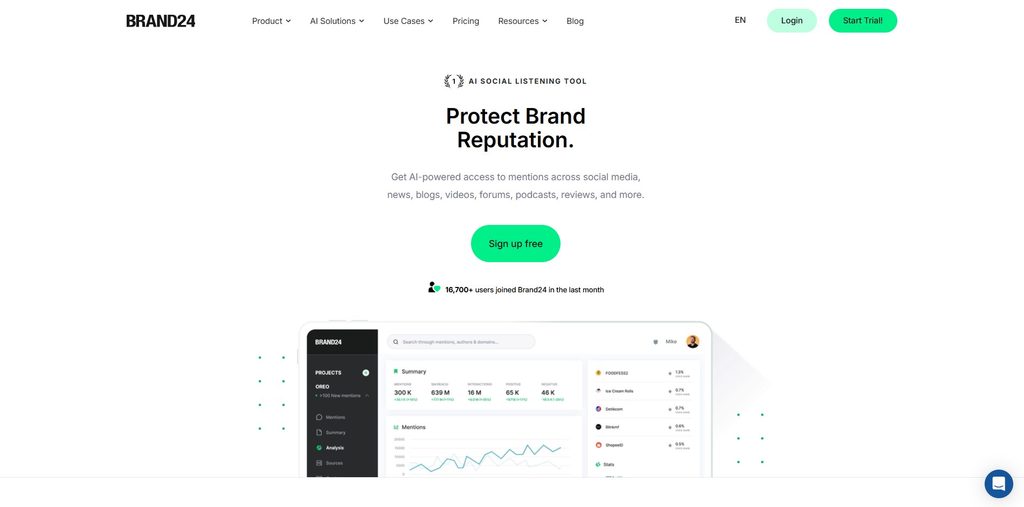
Brand24 is an online media monitoring and social listening platform that tracks brand, product, competitor, and keyword mentions across the web. Although it is not a traditional backlink analysis platform, ecommerce SEO teams can use Brand24 to find websites that mention their brand or products without linking to them. These unlinked mentions can then become highly relevant link reclamation opportunities.
Established: 2011
Founder Led: Yes
Leadership Experience: Brand24 has more than a decade of experience in media monitoring, brand intelligence, sentiment analysis, and online mention tracking.
Average Review Score: Generally highly rated across major software review platforms
Starting Price: $249/month, or $199/month when billed annually
Notable Users: Ecommerce companies, brands, PR agencies, marketing teams, and reputation management professionals
Approach to Link Building:
- Unlinked brand mention discovery
- Product mention monitoring
- Competitor mention monitoring
- Blog monitoring
- News monitoring
- Publisher discovery
- Influencer discovery
- Keyword monitoring
- Digital PR monitoring
- Link reclamation research
- Media coverage tracking
- Campaign monitoring
- Sentiment analysis
- Competitor intelligence
- Brand visibility tracking
Summary of Online Reviews:
Brand24 is frequently praised for its broad monitoring coverage and ability to identify conversations surrounding brands and products. For ecommerce link building, its strongest use case is finding existing mentions that could potentially be converted into links. However, it does not replace a complete backlink database or outreach CRM, so teams may need to combine it with other SEO tools.
Best For:
Brand24 is best for established ecommerce brands that receive regular online mentions and want to uncover unlinked brand mentions, product coverage, publisher relationships, and digital PR opportunities.
7. Hunter.io
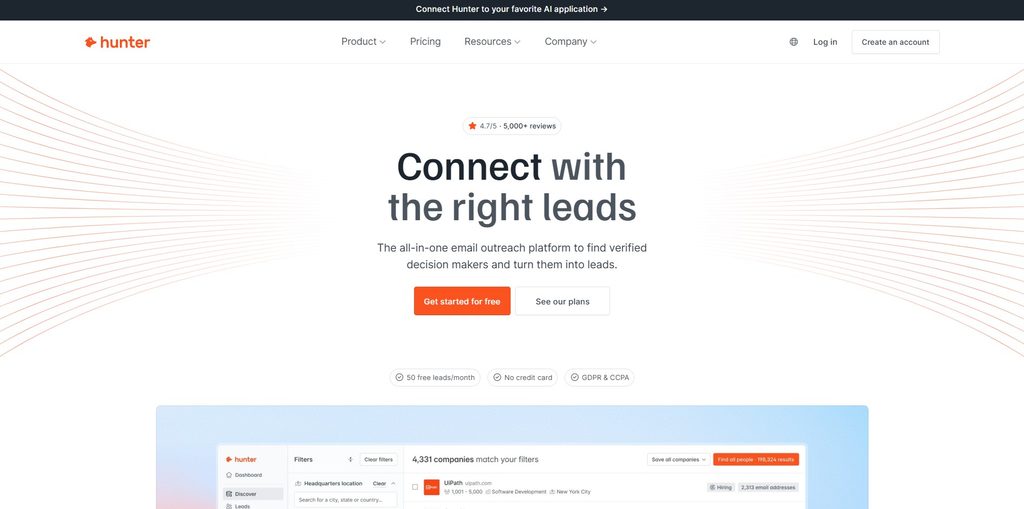
Hunter.io is an email discovery, verification, lead research, and outreach platform that helps businesses find professional contact information. Ecommerce link builders can use Hunter after discovering relevant backlink prospects to find the email addresses of bloggers, journalists, editors, website owners, and marketing contacts. It can also verify addresses and support personalized email sequences from connected inboxes.
Established: 2015
Founder Led: Yes
Leadership Experience: Hunter has specialized in professional email discovery, verification, lead data, and outbound email workflows for more than a decade.
Average Review Score: Generally highly rated across major software review platforms
Starting Price: Free plan available; Starter costs $34/month when billed annually
Notable Users: SEO professionals, agencies, sales teams, digital PR specialists, recruiters, and outreach teams
Approach to Link Building:
- Domain email searches
- Individual email discovery
- Email address verification
- Bulk email discovery
- Bulk email verification
- Publisher contact discovery
- Blogger contact research
- Editor email discovery
- Prospect list building
- Lead enrichment
- Cold email sequences
- Personalized outreach
- Follow-up emails
- Outreach tracking
- Email deliverability support
Summary of Online Reviews:
Hunter is widely used for its simple email discovery and verification process. For ecommerce link builders, it can be particularly useful after backlink prospects have already been identified through tools such as Ahrefs or TaskGlaze. Its main limitation is that it is not a full backlink research platform, so teams usually combine it with another tool for competitor analysis and prospect discovery.
Best For:
Hunter.io is best for ecommerce SEO teams and outreach specialists that already know which publishers they want to contact and need an efficient way to find, verify, and reach relevant decision-makers.
8. HARO
HARO, or Help a Reporter Out, connects journalists looking for expert sources with businesses, founders, and professionals who can contribute useful insights. Ecommerce founders and specialists can respond to relevant journalist requests and potentially earn media mentions, citations, and editorial backlinks from publications covering their industry.
HARO was shut down under Cision’s Connectively transition in December 2024, but Featured acquired HARO in 2025 and restored its original email-based service. In 2026, HARO continues to send free journalist opportunity newsletters three times each weekday.
Established: 2008
Founder Led: Originally
Original Founder: Peter Shankman
Current Owner: Featured.com
Average Review Score: Not directly comparable with traditional SEO software products
Starting Price: Free for journalists and sources
Notable Users: Journalists, ecommerce founders, entrepreneurs, PR professionals, marketers, and subject-matter experts
Approach to Link Building:
- Journalist request monitoring
- Expert commentary pitching
- Digital PR
- Editorial backlink opportunities
- Founder quote pitching
- Industry expertise contributions
- Media mention opportunities
- Authority building
- Journalist relationship building
- News commentary
- Brand exposure
- Editorial citations
- Earned media campaigns
- Reactive PR
Summary of Online Reviews:
HARO is attractive because it gives businesses opportunities to earn editorial coverage instead of directly asking websites for backlinks. However, competition for journalist requests can be high, and responding to a query does not guarantee publication or a link. Strong results generally depend on answering relevant requests quickly and providing concise, useful, original expertise.
Best For:
HARO is best for ecommerce founders, executives, product experts, and digital PR teams that can provide credible industry commentary and want opportunities to earn editorial mentions and authoritative backlinks.
9. NinjaOutreach
NinjaOutreach is a blogger, influencer, and business prospecting platform that helps marketers find potential outreach partners and manage email campaigns. Ecommerce companies can use its database to discover bloggers, influencers, journalists, companies, and niche websites that may be suitable for product reviews, sponsored content, resource placements, partnerships, or other backlink opportunities.
Established: 2014
Founder Led: Historically founder-led
Leadership Experience: NinjaOutreach has operated in influencer discovery, prospect research, email outreach, and link building for more than a decade.
Average Review Score: Mixed to positive depending on the software review platform
Starting Price: Pricing should be verified directly before purchase because current public pricing information is not consistently displayed
Notable Users: Ecommerce businesses, SEO agencies, influencer marketers, bloggers, and outreach teams
Approach to Link Building:
- Blogger discovery
- Influencer discovery
- Journalist prospecting
- Company prospecting
- Publisher research
- Built-in email discovery
- Product review prospecting
- Guest post discovery
- Resource page research
- Sponsored post prospecting
- Prospect list management
- Email outreach
- Email templates
- Automated follow-ups
- Open and click tracking
- Relationship history
- Contact form outreach
- Campaign performance tracking
NinjaOutreach states that users can search for bloggers, influencers, executives, journalists, and companies, discover email addresses, send outreach campaigns, track responses, and automate follow-ups.
Summary of Online Reviews:
NinjaOutreach can be useful for ecommerce businesses that want to combine blogger and influencer prospecting with direct outreach. Its database and filtering options can help teams identify niche-specific publishers and creators. However, businesses should test the current platform and verify its latest pricing, database quality, and available features before committing to a plan.
Best For:
NinjaOutreach is best for ecommerce brands that want to combine blogger outreach, influencer marketing, product review campaigns, publisher prospecting, and email outreach.
10. Broken Link Checker
Broken Link Checker is a free web-based tool that scans websites for broken internal and external hyperlinks. Ecommerce stores can use it to identify dead URLs, broken product links, outdated references, missing pages, and other linking problems. It can also support basic broken link building research when marketers are looking for outdated resources that could potentially be replaced with relevant content.
Established: Not publicly disclosed
Founder Led: Not publicly disclosed
Leadership Experience: Limited public information is available about the company or team behind the tool
Average Review Score: Limited verified software review data available
Starting Price: Free; the free checker currently supports scans of up to 3,000 pages
Notable Users: Ecommerce website owners, bloggers, SEO professionals, developers, and small businesses
Approach to Link Building:
- Broken link detection
- Dead external link discovery
- Broken internal link detection
- 404 link identification
- Ecommerce URL auditing
- Broken product link discovery
- Outdated resource identification
- HTTP response code reporting
- Link maintenance
- Website quality checks
- Broken resource research
- Basic broken link building research
Summary of Online Reviews:
Broken Link Checker is useful because it performs one focused task without requiring users to purchase a complete SEO platform. It can quickly identify dead links and show where they appear in a website’s HTML. However, it does not provide competitor backlink databases, email discovery, prospect management, automated outreach, or campaign tracking, so it is considerably more limited than dedicated link building platforms.
Best For:
Broken Link Checker is best for smaller ecommerce stores, website owners, and SEO professionals that need a simple free tool for finding broken links or supporting basic broken link building research.
How Ecommerce Link Building Tools Help
Ecommerce link building tools make it easier to find, manage and track backlink opportunities. Instead of doing everything manually, SEO teams can use these tools to research competitors, discover relevant websites, find contact details and manage outreach campaigns.
They can also help ecommerce businesses find websites that already link to competing stores or similar products. This gives teams a clearer idea of where good backlink opportunities may exist.
Many tools also support email discovery, verification and follow-up automation. This can save time and make outreach more organized, especially when managing large prospect lists.
Link monitoring is another important benefit. Ecommerce teams can track new backlinks, lost links and live placements to see whether their campaigns are working.
Overall, ecommerce link building tools help businesses save time, find better opportunities and manage backlink campaigns more efficiently.
How to Choose the Right Ecommerce Link Building Tool
The best ecommerce link building tool depends on your goals, budget and the size of your SEO campaigns. Some tools are better for backlink research, while others focus on outreach, contact discovery or link monitoring.
Start by checking whether the tool can analyze competitor backlinks and uncover relevant link opportunities. This is especially useful for ecommerce stores that want to find websites already linking to similar products, brands or category pages.
You should also consider outreach features. Tools with email discovery, verification, personalization and automated follow-ups can save a lot of time when contacting bloggers, publishers and website owners.
Backlink monitoring is another important feature. A good platform should help you track new links, lost links and whether your placements remain live.
Finally, compare pricing and workflow. Smaller ecommerce businesses may only need a simple research or email finder tool, while agencies and larger stores may benefit more from an all-in-one platform that combines research, outreach, CRM and link tracking.
Benefits of Ecommerce Link Building Tools
Ecommerce link building tools help online stores manage backlink campaigns more efficiently. They reduce manual work, improve prospect research and make it easier to track results.
Some of the main benefits include:
- Faster backlink research: Find competitor links, referring domains and link gaps more quickly.
- Better prospect discovery: Identify relevant blogs, publishers, product review sites and niche websites.
- Easier outreach: Find contact details, verify emails and manage follow-ups from one place.
- More organized campaigns: Keep prospects, conversations and link placements in a structured workflow.
- Improved link monitoring: Track new, lost and live backlinks without checking every page manually.
- Stronger competitor insights: See where competing ecommerce brands are earning links and which pages attract the most backlinks.
- More scalable link building: Manage larger outreach campaigns without relying heavily on spreadsheets.
- Better reporting: Measure campaign activity, acquired links and overall link building performance.
For ecommerce businesses, these benefits can make link building more consistent, easier to manage and more focused on opportunities that can support organic search growth.
Common Mistakes Ecommerce Businesses Make With Link Building Tools
Using link building tools can save time, but poor strategy can still lead to weak results. Ecommerce businesses should avoid relying on automation without checking link quality and relevance.
Some common mistakes include:
- Focusing only on domain metrics: A high-authority website is not always relevant to your niche or products.
- Sending generic outreach emails: Poor personalization can reduce response rates and damage publisher relationships.
- Building links to the wrong pages: Ecommerce brands should balance links across category pages, useful content and commercial pages.
- Ignoring link relevance: Backlinks from unrelated websites may provide little SEO value.
- Using too much automation: Fully automated outreach can make campaigns look spammy.
- Not verifying email addresses: Invalid contacts can increase bounce rates and reduce deliverability.
- Ignoring lost backlinks: Valuable links can disappear over time and should be monitored.
- Tracking quantity instead of quality: A smaller number of relevant, trusted links can be more useful than many weak backlinks.
- Not reviewing prospects manually: Tools can find opportunities, but human checks are still important.
- Using one tool for everything: Some platforms are better for research, while others are stronger for outreach, monitoring or contact discovery.
Avoiding these mistakes can help ecommerce businesses run cleaner, more targeted and more effective link building campaigns.
How Much Do Ecommerce Link Building Tools Cost?
The cost of ecommerce link building tools depends on the features, number of users and size of your campaigns. Some tools are free, while advanced platforms can cost several hundred dollars per month.
Basic tools for broken link checking, journalist opportunities or limited email searches may be free. Email finder and outreach tools often start around $30 to $50 per month. More advanced SEO and backlink research platforms commonly start between $100 and $300 per month.
Enterprise outreach platforms can cost $300 per month or more, especially when they include large prospect databases, automation, CRM features and team collaboration. Some managed link building services also charge per successful placement instead of using a monthly subscription.
Ecommerce businesses should compare the cost with the features they actually need. A small store may only need backlink research and email discovery, while a large brand or agency may benefit from a complete platform that includes prospecting, outreach, CRM and backlink monitoring.
The Future of Ecommerce Link Building Tools
Ecommerce link building tools are becoming more automated and data-driven. In the future, more platforms will use AI to find relevant prospects, personalize outreach, suggest better link opportunities and help teams manage campaigns with less manual work.
AI will also make prospect filtering more accurate. Instead of relying only on domain authority or traffic, tools may evaluate topical relevance, brand fit, content quality and the likelihood of earning a response.
Another major change will be stronger integration between backlink research, email discovery, outreach, CRM and link monitoring. Ecommerce teams will increasingly prefer platforms that handle the full link building workflow instead of using several separate tools.
Digital PR and brand mentions will also become more important. Tools that track unlinked mentions, journalist opportunities and publisher coverage may play a bigger role in ecommerce SEO strategies.
Overall, the future of ecommerce link building tools will focus on better automation, smarter prospect selection, stronger personalization and more complete campaign management.
Related Guides
Looking for more tools to support outreach, backlink research and link building campaigns? These related guides can help you compare more options and find the right tools for different SEO needs:
- 10 Best Link Building Tools for 2026
- Best Blogger Outreach Tools for Link Building
- Best Tools for Backlink Monitoring
- Best Competitor Backlink Analysis Tools
- Best Link Building and Digital PR Outreach Tools
FAQs About Ecommerce Link Building Tools
What is the best ecommerce link building tool?
The best tool depends on your needs. TaskGlaze is useful for teams that want backlink research, prospecting, outreach and link monitoring in one platform. Ahrefs is stronger for backlink analysis, while Pitchbox and BuzzStream are better suited to outreach management.
Are ecommerce link building tools worth it?
Yes, especially for stores running regular SEO campaigns. These tools can save time by helping teams research backlinks, find prospects, discover contact information, manage outreach and monitor acquired links.
Can link building tools help ecommerce product pages rank?
They can help indirectly by making it easier to earn relevant backlinks and improve website authority. However, rankings also depend on content quality, technical SEO, internal linking, search intent and competition.
What features should an ecommerce link building tool have?
Useful features include competitor backlink analysis, prospect discovery, contact finding, email verification, outreach automation, CRM tools, backlink monitoring and campaign reporting.
Are there free ecommerce link building tools?
Yes. Some tools offer free plans or limited free features. HARO and Broken Link Checker can be used for free, while platforms such as Hunter.io also provide limited free access.
How much do ecommerce link building tools cost?
Prices vary widely. Some basic tools are free, while paid options can start around $30 to $50 per month. Advanced SEO and outreach platforms can cost $100 to $300 per month or more.
Can ecommerce businesses use more than one link building tool?
Yes. Many teams combine different tools because each platform has different strengths. For example, one tool may be used for backlink research, another for contact discovery and another for outreach management.
What is the best link building tool for small ecommerce stores?
Small stores should look for affordable tools that cover their main needs without adding unnecessary complexity. A simple combination of backlink research, email discovery and basic monitoring may be enough.
What is the best link building tool for ecommerce agencies?
Agencies usually need tools that support larger campaigns, multiple projects, team collaboration, outreach automation and reporting. All-in-one platforms or dedicated outreach systems are often a better fit.
Do ecommerce link building tools guarantee backlinks?
No. These tools help with research, prospecting, outreach and tracking, but they cannot guarantee that a publisher will respond or add a backlink. Results still depend on relevance, content quality, outreach quality and the value offered to the publisher.