Most businesses have a marketing budget. Very few have a marketing strategy.
There is a real difference between those two things.
A budget is money. A strategy is the plan that decides whether that money does anything useful. Without it, you can spend thousands on ads, content, social media, and SEO and still have nothing to show at the end of the year. Not because the channels do not work. Because none of them connect to a clear goal.
This guide breaks down what a digital marketing strategy actually is, the types that exist, and how to build one that drives real results for your business.
What Is a Digital Marketing Strategy?
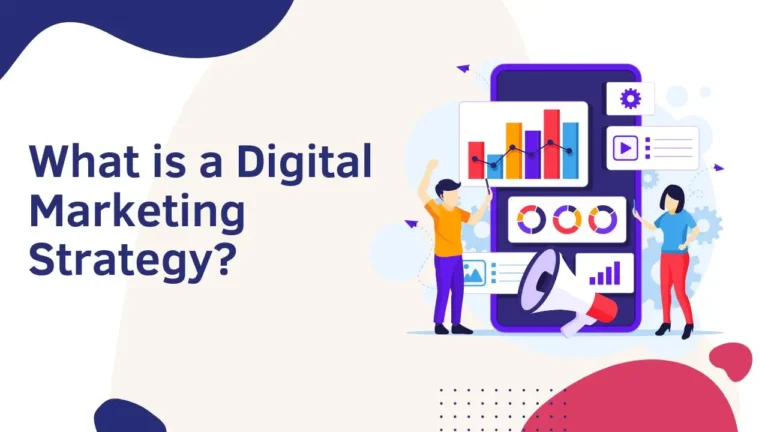
A digital marketing strategy is a plan that outlines how your business will use online channels to reach its marketing goals.
It answers three core questions. Who are you trying to reach? Where will you reach them? And what do you want them to do when you get their attention?
A digital marketing strategy is not a list of things you plan to post on Instagram. It is not a calendar of email sends. It is not a pile of blog topics. Those are tactics. A strategy is the plan that decides which tactics are worth doing, why, and in what order.
Think of it like building a house. The strategy is the architectural blueprint. Tactics are the bricks, windows, and wiring. You can have the best bricks in the world, but without the blueprint, you will end up with a pile of expensive rubble.
Digital Marketing Strategy vs Tactics vs Campaigns
These three terms get mixed up constantly. Here is how they actually fit together.
A strategy is your high-level plan. It defines your goals, your target audience, the channels you will use, and how you will measure success. It does not change every week.
A tactic is a specific action you take to execute the strategy. Publishing a blog post, sending an email, running a Google Ad, posting on LinkedIn. These are tactics. They sit inside the strategy.
A campaign is a focused, time-limited effort built around one goal. A three-month push to generate leads before a product launch is a campaign. A seasonal promotional run is a campaign. Campaigns live inside tactics, and tactics live inside strategy.
The flow goes one direction: strategy guides tactics, and tactics organize into campaigns. When businesses skip the strategy and jump straight to tactics, they end up doing a lot of activity that leads nowhere because nothing connects.
Why Your Business Needs a Digital Marketing Strategy
Here is the hard truth. Most businesses spend money on digital marketing without a documented plan guiding any of it.
That is money with no direction.
A clear digital marketing strategy does several things for your business that random tactical activity cannot.
It gives you focus. There are dozens of digital marketing channels available to any business. Without a strategy, you try to do all of them at once and end up doing none of them well. A strategy tells you exactly where to put your energy based on where your customers actually are.
It aligns your team. When everyone understands the plan, the goals, and the audience, every person on your team makes better decisions independently. Content writers write for the right people. Paid ads target the right keywords. Social posts speak the right language.
It makes results measurable. You cannot measure success if you never defined what success looks like. A strategy sets specific goals upfront, which means you can track whether your actions are working and adjust when they are not.
It protects your budget. When a new channel or trend appears (and something new always appears), a strategy helps you evaluate whether it serves your goals or distracts from them. Without a strategy, every shiny new thing pulls you off course.
The Main Types of Digital Marketing Strategies
A complete digital marketing strategy usually combines several of these approaches. Which ones you use depends on your business type, your audience, your goals, and your budget.
Search Engine Optimization (SEO)
SEO is the process of improving your website so it appears higher in search engine results when people search for topics related to your business. It works through a combination of content creation, technical website improvements, and building authority through links from reputable websites.
SEO is a long-term strategy. It takes months to show meaningful results, but once you build rankings, you receive traffic consistently without paying for every click. For most businesses, SEO delivers the highest return on investment of any digital channel over a 12 to 24 month period.
Content Marketing
Content marketing means creating genuinely useful content: articles, guides, videos, podcasts, and infographics. that attracts your target audience by answering their questions and helping them solve problems.
The goal is not to talk about your product at every turn. It is to become the most trusted and helpful resource in your space, so when someone is ready to buy, they already know and trust your brand. Content marketing supports SEO, social media, email, and PR simultaneously.
Pay-Per-Click Advertising (PPC)
PPC advertising places your business at the top of search results and across websites through paid placements. You pay only when someone clicks your ad. Google Ads is the most widely used PPC platform, but Meta Ads, LinkedIn Ads, and Microsoft Ads all serve different audiences effectively.
PPC delivers immediate visibility where SEO takes time. It works particularly well for time-sensitive promotions, new product launches, or capturing demand that already exists for what you sell. The limitation is simple: when you stop paying, the traffic stops too.
Email Marketing
Email marketing means sending targeted messages directly to people who have opted in to hear from you. It consistently delivers one of the highest returns of any digital channel because you own the relationship. Changes to social media algorithms or ad platform policies cannot take your email list away from you.
Email works at every stage of the customer journey. It warms up new leads, nurtures existing customers, and wins back people who stopped buying from you.
Social Media Marketing
Social media marketing uses platforms like LinkedIn, Instagram, Facebook, YouTube, and X to build your brand, engage your audience, and drive traffic to your website.
The key to using social media strategically is knowing which platforms your specific audience actually uses and creating content that fits that platform’s format and culture. What works on LinkedIn rarely works on Instagram. A strategy makes that decision deliberately instead of guessing.
Digital PR
Digital PR earns media coverage for your business in online news outlets, industry publications, and high-authority websites. Each placement builds brand credibility and generates backlinks that strengthen your search rankings.
Unlike traditional PR, digital PR creates permanent, searchable assets. An article about your business published in a respected publication drives traffic and trust for years, not just the day it is published.
Online Reputation Management (ORM)
Online reputation management is the practice of controlling what people find when they search for your name or your business on Google. It uses SEO, content marketing, PR, and review management to promote positive results and push down negative ones.
For professional services, healthcare, legal, and financial businesses, your Google search results are often the first thing a potential client checks before they decide to contact you. ORM is not optional in those industries. At Bluelinks Agency, reputation management is one of the most in-demand services we run for professionals and businesses because the stakes are that high.
Remarketing
Remarketing shows targeted ads to people who have already visited your website but did not take action. Because these people already know your brand, they convert at significantly higher rates than cold audiences. Remarketing is one of the most cost-efficient tactics in a paid advertising strategy.
Content Through Video and Podcasts
Video and podcast content lets businesses build trust and demonstrate expertise in a format that text cannot fully replicate. When your audience hears your voice or sees your team explain something clearly, the relationship deepens faster than any written article can achieve alone.
How to Build a Digital Marketing Strategy: 6 Steps
Understanding what a digital marketing strategy is matters. Knowing how to build one is what actually moves your business forward.
Step 1: Define Your Goals
Every strategic decision you make flows from this step. Before you choose a channel, write a piece of content, or launch an ad, you need to know exactly what you are trying to achieve.
Be specific. “Grow the business online” is not a goal. “Generate 30 qualified leads per month from organic search within six months” is a goal. Goals need to be measurable and tied to actual business outcomes, not just activity.
Set one primary goal and two or three supporting goals. Spreading across too many goals produces mediocre results everywhere.
Step 2: Research Your Audience
You cannot market effectively to people you do not understand. Build a clear picture of your ideal customer: who they are, what problems they have, where they spend time online, what questions they search for, and what objections they raise before buying.
Use real data. Look at your existing customer base. Review your website analytics. Read reviews of competitors on platforms like Google and Trustpilot. Real insights beat assumptions every time.
Step 3: Audit Your Current Digital Presence
Before planning what to do next, understand where you stand now. Check your current search rankings. Review your website traffic and where it comes from. Look at your social profiles, your review ratings, and any content you have already published.
This audit gives you a starting point to measure progress against and tells you which gaps to close first.
Step 4: Study Your Competitors
Identify three to five competitors and study their digital presence systematically. What keywords do they rank for? What content do they publish? Where do they earn backlinks? What are their customers saying in reviews?
The goal is not to copy them. It is to understand where they are strong, where they are weak, and where you can do something better or different.
Step 5: Choose Your Channels and Build Your Content Plan
Based on your goals and your audience research, select the channels where you will focus. Resist the temptation to be everywhere at once. A business that concentrates on two or three channels and executes them well consistently outperforms one that spreads the same budget across eight channels.
Then build your content plan. What will you publish, when, and on which platforms? Plan at least 90 days ahead. Reactive planning almost always produces inconsistent, low-quality output.
Step 6: Track, Measure, and Adjust
Set up your measurement framework before you publish anything. Define which metrics you will track and how they connect to your goals.
Review your strategy performance every month. What is working? What is producing no results? Where are your best outcomes coming from? The businesses that grow consistently are the ones that measure honestly and adjust based on what the data tells them, not what they hoped would happen.
How to Measure Your Digital Marketing Strategy
These are the metrics that actually tell you whether your strategy is working.
Organic traffic growth tracks month-over-month increases in visitors arriving from search engines. Use Google Search Console for the most accurate data. Rising organic traffic means your SEO and content efforts are building traction.
Keyword rankings show which search terms your website appears for and where you sit in the results. Movement upward, even from position 40 to position 20, signals your content is gaining authority.
Lead volume and source tells you how many leads you generated and which channels produced them. This connects marketing activity to actual business outcomes rather than just traffic numbers.
Email open and click rates indicate whether your email content is relevant enough to earn attention. Open rates below 20% usually mean your subject lines need work. Click-through rates below 2% suggest your content is not motivating people to act.
Cost per acquisition for paid channels tells you what it costs to win one new customer. This number needs to sit comfortably below the lifetime value of that customer for the channel to make financial sense.
Common Digital Marketing Strategy Mistakes
These are the mistakes that cost businesses the most money and time.
Not documenting the strategy. A strategy that exists only in someone’s head or in an old presentation nobody reads is not a strategy. Write it down, share it with everyone involved, and review it every quarter.
Trying to do everything at once. Every month brings new platforms, new formats, and new marketing trends. Businesses that chase every one of them never build real depth in any channel. Focus on the fundamentals first.
Optimizing for vanity metrics. Follower counts, impressions, and likes tell you almost nothing about whether your strategy is working. Optimise for leads, conversions, and revenue. Those are the numbers that keep a business alive.
Quitting before the strategy matures. SEO takes months. Content marketing takes months. Email list building takes months. Most businesses evaluate whether their strategy is working after eight weeks and give up right before results would have started arriving.
No clear customer journey. Most businesses create content only for people already ready to buy. A complete strategy reaches people at every stage: those who have just discovered they have a problem, those actively comparing solutions, and those ready to make a decision.
Frequently Asked Questions About Digital Marketing Strategy
What is the difference between a digital marketing strategy and a digital marketing plan?
A strategy defines the overall direction: your goals, your audience, your competitive positioning, and which channels you will use. A plan is the detailed document that describes how you will execute that strategy, including timelines, budgets, and specific deliverables. Strategy comes first. The plan follows from it.
How long does it take to see results from a digital marketing strategy?
It depends heavily on which channels you use. Paid advertising can drive results within days. SEO and content marketing typically take three to six months before showing meaningful traffic growth. A full return on investment from an SEO-led strategy in a competitive market usually takes twelve to eighteen months of consistent effort.
How much should a small business spend on digital marketing?
There is no universal answer, but a commonly used guideline is to allocate between 7 and 10 percent of revenue to marketing for established businesses, and up to 20 percent for businesses in early growth phases looking to expand their market share quickly. Budget allocation matters less than how strategically you use what you have.
Can a small business compete with larger competitors through digital marketing?
Yes, often very effectively. Smaller businesses can target niche audiences that larger competitors ignore, create more authentic and specific content, and move faster to capitalize on new opportunities. SEO in particular levels the playing field because rankings reward content quality and relevance, not just budget.
Do I need separate strategies for each digital marketing channel?
Your overall strategy stays consistent: the same goals, the same audience, the same brand positioning. But your approach adapts to each channel. LinkedIn content looks and reads differently from Instagram content. Email reads differently from a blog post. The strategy unifies everything. The execution adapts to each format.
How often should I review and update my digital marketing strategy?
Review your performance data monthly. Conduct a deeper strategic review every quarter to assess whether your goals, channel mix, and priorities still make sense. Do a full reset annually to account for market shifts, competitor movements, and new opportunities.
What is the single most important part of a digital marketing strategy?
Understanding your audience deeply. Every other decision flows from knowing exactly who you are trying to reach, what problems they have, and what they need to see before they trust you enough to buy.
A Strategy Is What Separates Marketing That Grows a Business From Marketing That Burns a Budget
Most businesses do digital marketing. Very few do it with a clear plan connecting every action to a real outcome.
The ones without a strategy do a lot. They publish content, run ads, post on social media, and send emails. But because nothing connects to a defined goal or a clear audience, the results are inconsistent at best and invisible at worst.
Build the strategy first. Define your audience, choose your channels based on evidence, set specific goals, and commit to reviewing the numbers every month. That process is not complicated. What makes it hard is the patience and consistency required to follow it long enough for the compounding results to appear.
If you want help building a digital marketing strategy grounded in your specific market and audience, Bluelinks Agency is ready to help you start.